When it comes to protecting and finishing products, coatings play a critical role in enhancing durability, aesthetics, and performance. Two of the most widely used methods in the process industries are powder coating and liquid coating. While both provide reliable protection and attractive finishes, the choice between the two depends on factors such as application, environment, budget, and performance requirements.
In this blog, we’ll explore the differences, advantages, and limitations of each method to help you determine the right solution for your industry.
1. What is Powder Coating?
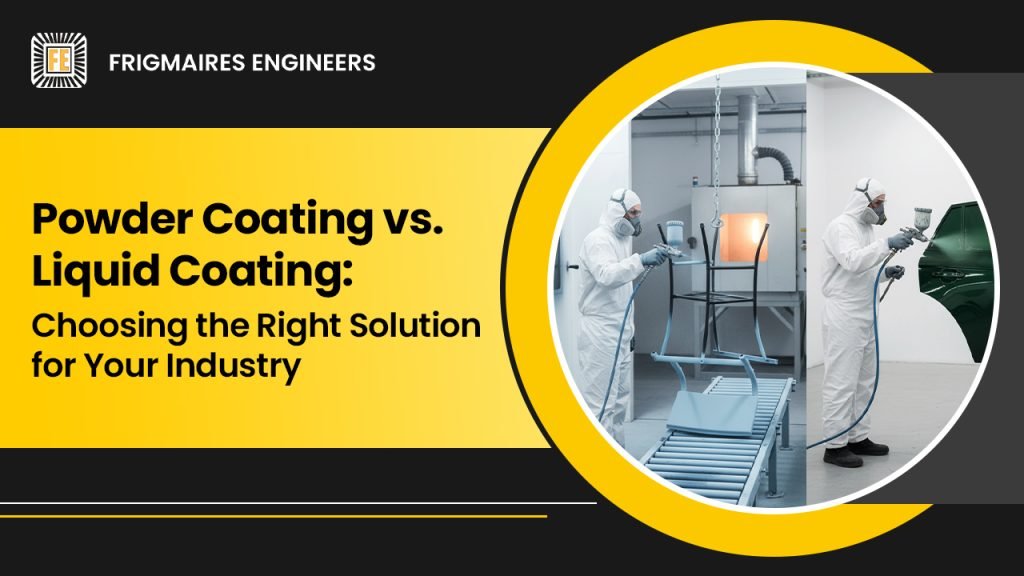
Powder coating is a dry finishing process where finely ground particles of pigment and resin are electrostatically charged and sprayed onto a surface. The coated item is then cured under heat, allowing the powder to melt and form a uniform, durable finish.
Key Features:
- Solvent-free and eco-friendly.
- Produces a thick, even coating.
- Typically applied to metals, though advancements are expanding to plastics and composites.
2. What is Liquid Coating?
Liquid coating involves applying a wet paint mixture — typically composed of pigments, resins, and solvents — to a surface using spray, dip, or brush techniques. After application, the coating dries or cures to form a protective layer.
Key Features:
- Can be applied to a wide range of substrates (metal, plastic, wood, etc.).
- Available in a vast selection of colors, finishes, and textures.
- Suitable for both small and large-scale applications.
3. Comparing Powder Coating and Liquid Coating
| Factor | Powder Coating | Liquid Coating |
| Application Method | Electrostatic spray & heat curing | Spray, dip, brush, or roller |
| Environmental Impact | Low-VOC, eco-friendly | May release VOCs depending on formulation |
| Durability | Highly resistant to chipping, corrosion, and wear | Durable but may require multiple coats for protection |
| Finish Variety | Limited finishes, mostly solid colors | Wide range of textures, gloss levels, and special effects |
| Cost Efficiency | Cost-effective for high-volume runs | Flexible for small or custom projects |
| Substrate Compatibility | Mostly metals; limited plastics & composites | Metals, plastics, wood, glass, composites |
4. Advantages of Powder Coating
- Eco-Friendly: Contains no solvents or harmful VOC emissions.
- Durability: Superior resistance to scratches, chips, and corrosion.
- Efficiency: Overspray can often be collected and reused.
- Uniform Finish: Produces a smooth, consistent coating without drips.
5. Advantages of Liquid Coating
- Versatility: Can be applied to a wide range of substrates.
- Finish Options: Allows complex effects like metallic, pearlescent, or textured finishes.
- Flexibility in Small Batches: More cost-effective for custom or low-volume production.
- Lower Curing Temperatures: Suitable for heat-sensitive materials.
6. Which One Should You Choose?
The decision depends on your industry needs:
- Automotive & Heavy Equipment → Powder coating is preferred for durability and corrosion resistance.
- Architectural Applications → Powder coating ensures long-lasting protection against harsh weather.
- Consumer Goods & Electronics → Liquid coatings provide flexibility and attractive finishes.
- Wood, Plastics & Heat-Sensitive Materials → Liquid coating is better suited due to lower curing requirements.
- Custom & Specialty Finishes → Liquid coating allows more design creativity and unique effects.
7. Frigmaires’ Expertise
At Frigmaires, we design and deliver turnkey plants and equipment for both powder coating and liquid coating applications. Whether you are setting up a new facility or upgrading existing processes, our solutions ensure:
- High efficiency and consistency in coating quality.
- Environmentally sustainable technology with low emissions.
- Custom-engineered systems to meet your production scale and substrate requirements.
- Comprehensive training and support for smooth operations.
Conclusion
Both powder coating and liquid coating have their place in the process industries. Powder coating is ideal for long-lasting, durable finishes, particularly on metals and large-scale production, while liquid coating offers unmatched flexibility, finish variety, and substrate compatibility.
The smartest choice depends on your industry, material, and production goals. By partnering with experts like Frigmaires, you can be assured of getting the right coating technology tailored to your needs, ensuring high performance, sustainability, and long-term value.